
46 in stock
BPC-157 is a synthetic gastric pentadecapeptide consisting of 15 amino acids (Gly−Glu−Pro−Pro−Pro−Gly−Lys−Pro−Ala−Asp−Asp−Ala−Gly−Leu−Val). It is a partial sequence of a naturally occurring human gastric protein. In laboratory settings, BPC-157 is primarily studied for its cytoprotective properties and its role in accelerating the healing of musculoskeletal and soft tissues.
Musculoskeletal Recovery Research: Investigating the upregulation of growth factor receptors to accelerate the repair of tendons, ligaments, and muscle fibers.
Angiogenesis & Vasculogenesis: Studies focusing on the peptide's ability to promote the formation of new blood vessels, crucial for nutrient delivery to damaged research sites.
Gastrointestinal (GI) Integrity: Exploring the "gastric protective" effects on the mucosal lining and its potential role in balancing gut microbiota.
Anti-Inflammatory Pathways: Researching the modulation of systemic inflammation markers and the reduction of oxidative stress in cellular models.
BPC-157 is known to influence the Nitric Oxide (NO) pathway and modulate Vascular Endothelial Growth Factor (VEGF) expression. Researchers utilize this compound to observe how it interacts with the Body Protective Compound (BPC) pathway to bypass standard inhibitory healing responses in compromised tissue.
| Specification | Detail |
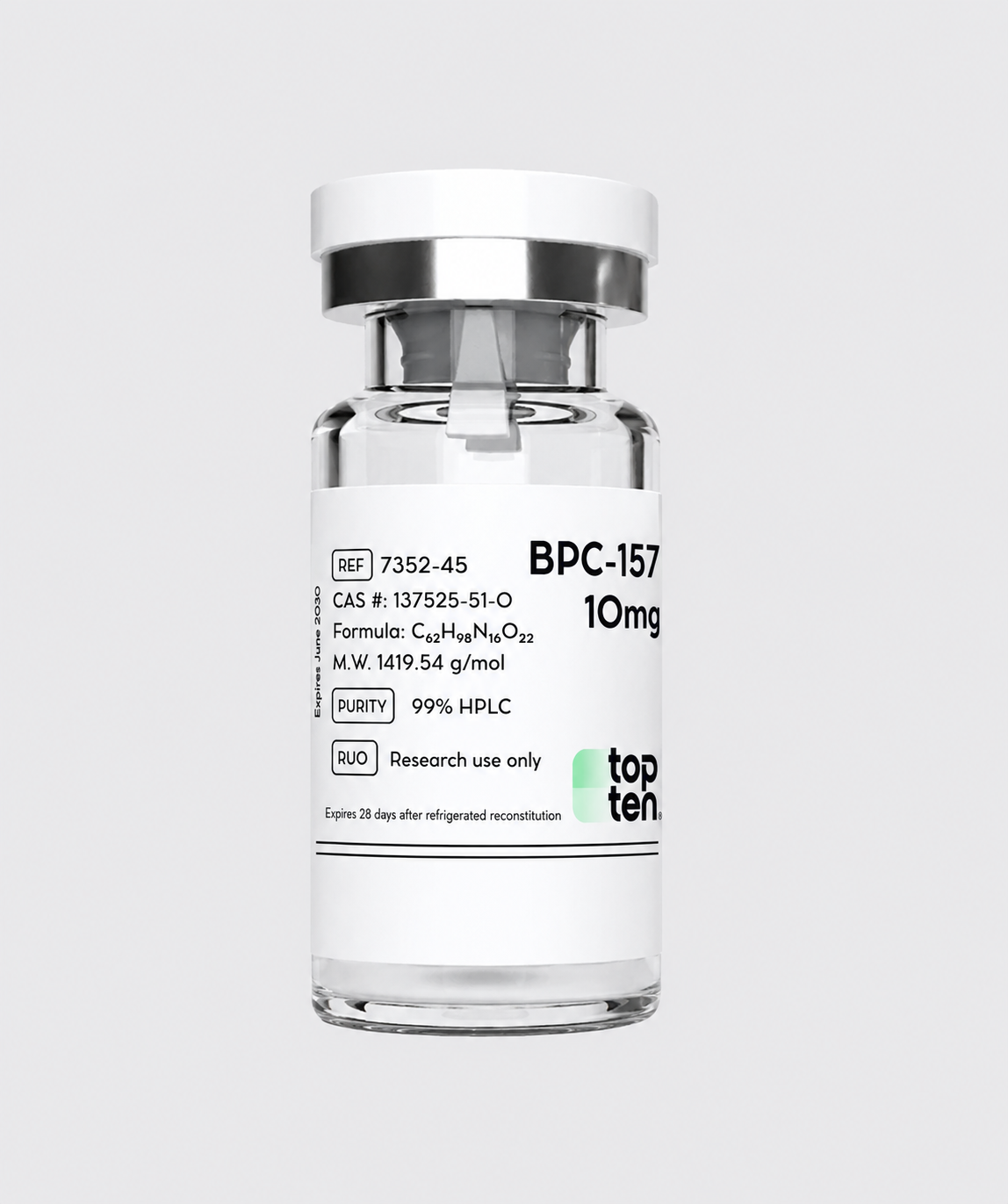
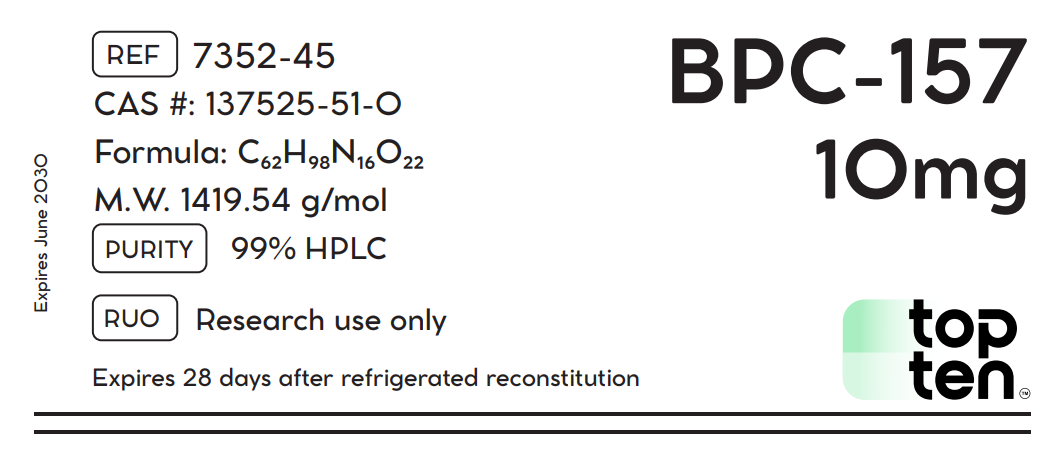
| Molecular Formula | C62H98N16O22 |
| Molecular Weight | 1419.5 g/mol |
| Purity Level | >99% (HPLC verified) |
| Sequence | Gly-Glu-Pro-Pro-Pro-Gly-Lys-Pro-Ala-Asp-Asp-Ala-Gly-Leu-Val |
| Storage Requirement | Lyophilized: -20°C; Reconstituted: 2°C–8°C |
For Laboratory Research Only: All products listed on this site, including BPC-157, are intended for in vitro laboratory research. These products are not for human or animal consumption, nor are they intended to diagnose, treat, cure, or prevent any medical condition or injury. This compound is strictly for use by qualified professionals in a controlled research environment.