
17 in stock
TB-500, also known as Thymosin Beta-4, is a synthetic version of a naturally occurring peptide made up of 43 amino acids. In animal studies, it has shown potential in supporting the body’s healing and recovery processes by promoting new blood vessel growth, regulating inflammation, and aiding in tissue repair.
Research suggests TB-500 plays a role in protecting cells, reducing oxidative stress, and promoting regeneration in areas like the heart and central nervous system. Because of these properties, it’s also being explored for its potential in anti-aging and overall wellness applications.TB-500 is a synthetic fraction of the naturally occurring protein Thymosin Beta-4 (Tβ4). While Tβ4 is found in high concentrations in blood platelets and wound fluid, TB-500 is the specific peptide sequence (Ac−Ser−Asp−Lys−Pro−Asp−Met−Ala−Glu−Ile−Glu−Lys−Phe−Asp−Lys−Ser−Lys−Leu−Lys−Lys−Thr−Glu−Thr−Gln−Glu−Lys−Asn−Pro−Leu−Pro−Ser−Lys−Glu−Thr−Ile−Glu−Gln−Glu−Lys−Gln−Ala−Gly−Glu−Ser) that researchers utilize to study localized tissue regeneration and cellular signaling.
Actin Polymerization Studies: TB-500 is the primary G-actin sequestering molecule in eukaryotic cells. Research focuses on how it regulates the availability of actin monomers for filament assembly.
Cell Migration & Chemotaxis: Investigating the "homing" effect where the peptide stimulates the migration of progenitor cells to the site of cellular damage.
Angiogenesis & Neovascularization: Studies exploring the development of new micro-vessels in ischemic tissues to restore nutrient flow.
Dermal & Corneal Repair: Scientific exploration into the acceleration of epithelial cell growth and collagen deposition in controlled laboratory models.
The primary mechanism of TB-500 involves its ability to upregulate cell-building proteins. By binding to G-actin, it creates a reservoir of building blocks that cells can use for rapid remodeling. Researchers observe its impact on the extracellular matrix (ECM) to understand how it bypasses typical scar tissue formation (fibrosis) in favor of functional tissue restoration.
| Specification | Detail |
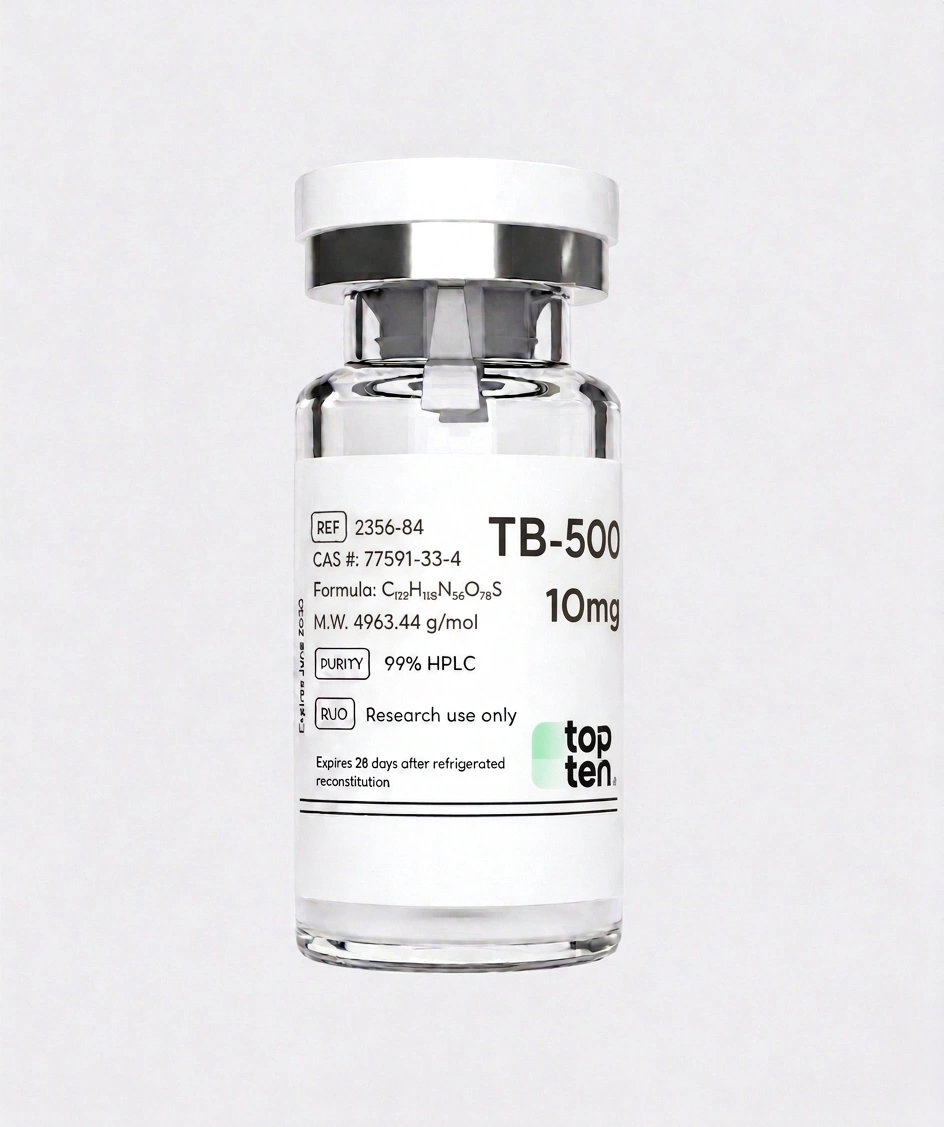
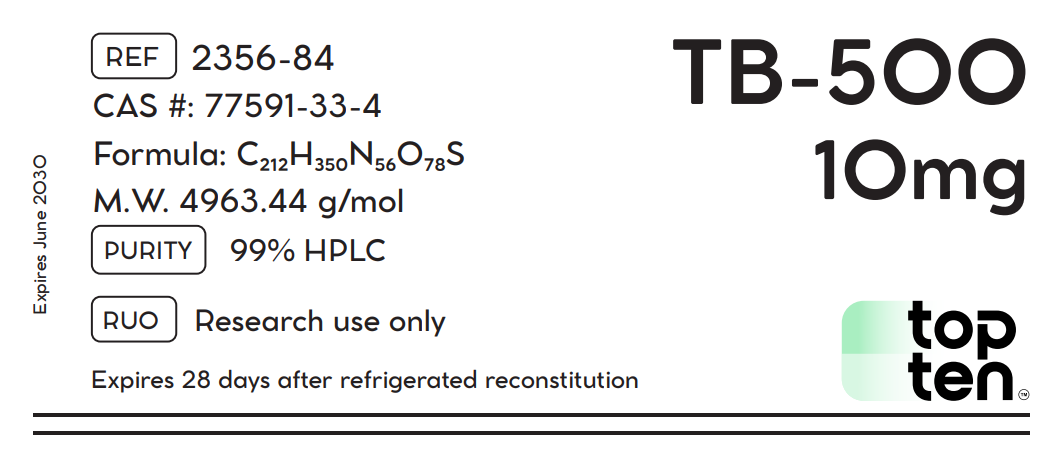
| Molecular Formula | C212H350N56O78S1 |
| Molecular Weight | 4963.5 g/mol |
| Purity | ≥98% (HPLC/MS validated) |
| Physical Appearance | Lyophilized White Powder |
| Stability | 24 months (lyophilized) at -20°C |
Notice for Researchers: TB-500 is a synthetic laboratory reagent intended solely for scientific research and development. It is not for human or veterinary use. This product is not intended to treat "athletic injuries" or "enhance performance." All experiments should be conducted in vitro or within authorized animal model frameworks by licensed professionals.